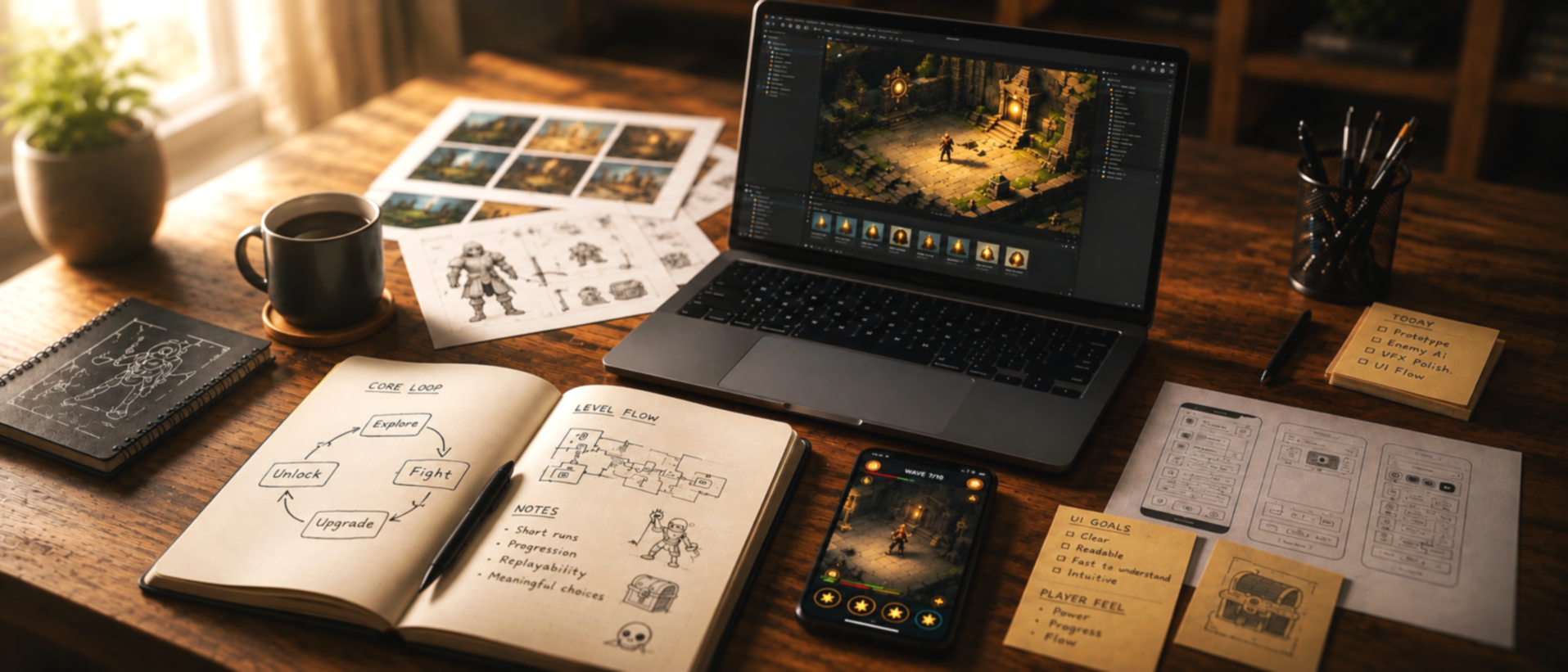
R(AI)PID GAME CREATION
Turn Ideas Into Playable Games!
A live, hands-on course in AI assisted game creation using the R(AI)PID Framework™ — from idea, game core loop to UX/UI, art, implementation and playable prototypes.
Starts January 2027 · Live online · Limited Places
IDEA → GAME LOOP → EXPERIENCE → WORLD PROTOTYPE → ITERATE → PLAYABLE GAME
4 WEEKENDS · 8 LIVE SESSIONS · 16 HOURS · LIMITED PLACES
-
Turn an initial idea into a focused game concept.
Learn how to develop and challenge game ideas through research, player needs, practicality and potential. Use AI as a creative sparring partner, then bring your thinking together into a lightweight Game Concept Brief defining the audience, design pillars and prototype scope.
Outcome
A Game Concept Brief ready to become your core loop.
-
Turn the game concept into a compelling gameplay loop.
Learn how Core and Meta Loops work, and how player actions, rewards and progression create motivation to keep playing. We will use game-design frameworks and AI as a sparring partner to explore mechanics and gameplay structure, then shape the loop that gives the game its rhythm.
Outcome
A defined Core Loop and Meta Loop that give the game a clear gameplay foundation.
-
Turn the core loop into a clear, engaging player experience.
You will learn how game UX/UI, player flow and interaction design shape the way a game feels to play. We will explore information hierarchy, onboarding and feedback, then use AI to rapidly explore solutions and greybox the experience before investing in visual production.
Outcome
A coded greyboxed player experience with the key flows, interactions and UX/UI direction defined.
-
Turn the experience into a distinctive visual world.
Learn how art direction, visual style and AI-assisted creation can bring your game to life. We will explore characters, environments, props, animation and VFX pipeline, while learning how to create a consistent visual language across the game.
Outcome
A cohesive visual direction and a set of game-ready assets ready for implementation.
-
Turn game design into a working, playable prototype.
You will learn how AI-assisted development can turn game systems and assets into a working experience. Work with AI coding agents such as Claude or Codex to build mechanics, interactions, UI and audio, while learning to prompt, test, debug and iterate as the game comes together.
Outcome
A working playable prototype running locally and ready to test on your own device.
-
Tune a working prototype into a playable game.
Learn how to playtest, observe and analyse a game to identify problems in gameplay, UX, balance and game feel. I’ll teach you how to create and share playable builds for remote testing, gather structured feedback and use AI as a critical design partner to turn what you learn into focused iterations.
Outcome
A playtested and refined prototype, improved through structured player feedback and AI-assisted iteration.
-
Bring your game together, polish the experience and share what you’ve built.
Learn how to take a tested prototype through a final polish pass, prepare it for presentation and communicate your game clearly. We’ll showcase the projects, reflect on the AI-assisted workflows and lessons learned, share feedback and explore how to take the process into your own future game ideas.
Outcome
A polished playable game, a clear understanding of the R(AI)PID workflow, and the confidence to apply it to your own ideas.
Registrations currently closed, new dates will be announced for 2027 cohorts.
READY TO BUILD?
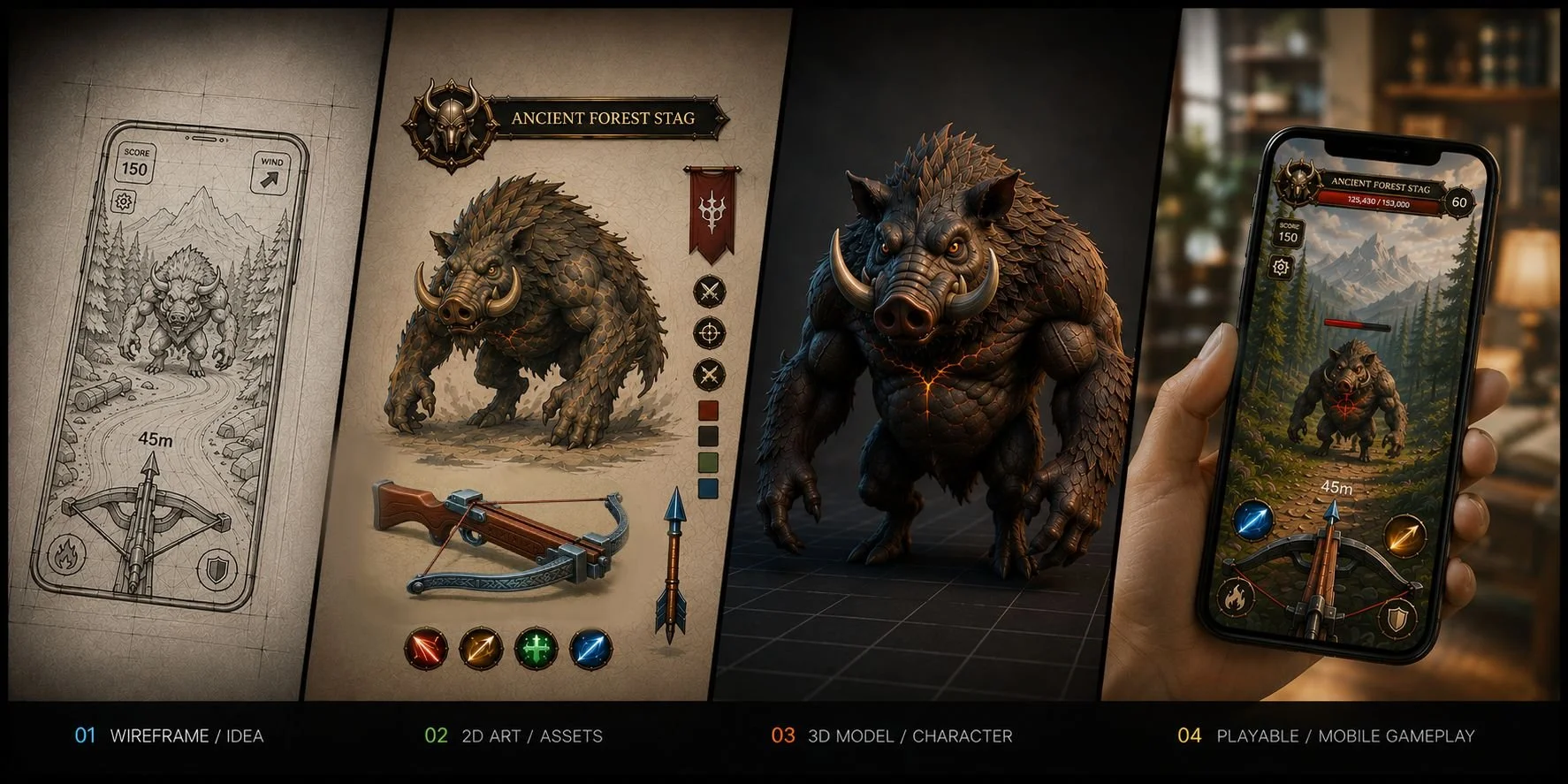
FAQs
Who is this course for?
1
For game designers, UX/UI designers, artists, developers, creative professionals and aspiring game makers who want to learn how to create games using AI-first workflows.
Do I need coding or game-development experience?
2
Some familiarity with games or digital creation is helpful, but you don't need to be an experienced programmer. We'll introduce AI-assisted development step by step.
You'll work through the complete R(AI)PID workflow to create a playable game prototype — from concept and core loop through design, visual development, implementation and testing.
What will I build during the course?
3
Will I work on my own game idea?
4
The cohort will work together on a shared game project, with opportunities to personalise mechanics, characters, visuals, UX and other elements. The goal is to learn the complete R(AI)PID process together, which you can then apply to your own game ideas.
How does the course work?
5
Four weekends of live, hands-on online sessions: 8 × 2-hour sessions combining teaching, demonstrations, guided building and experimentation.
What happens if I miss a session?
6
The sessions are designed to build on each other, so we strongly recommend attending all eight. If you need to miss a session, you'll receive the relevant materials and homework so you can catch up before the next class.
How much work is there between sessions?
7
You'll have focused homework between sessions to continue developing and refining the project. We'll provide the expected weekly commitment before the course begins.
Are the sessions recorded?
8
No. The sessions are live and not recorded, creating a focused cohort experience with real-time interaction, questions, feedback and collaboration.
What software and AI tools will I need?
9
You'll need access to a computer, reliable internet and a small set of AI and creative tools. Some tools require paid subscriptions, which are not included in the course fee.
AI & game creation
Ideation: Claude or ChatGPT
AI coding: Claude Code or Codex
2D image generation: ChatGPT Images or another multimodal image-generation platform
3D generation: Meshy or Tripo 3D
Image editing: Photoshop or Photopea (free)
Video editing: CapCut or Premiere Pro (optional)
We'll provide the final tool list and setup requirements before the course begins.
How many people will be in the course?
10
10–12 participants
The first cohort will be intentionally kept small to make the live sessions hands-on, interactive and collaborative.
For workshops, speaking and other group course queries contact us directly at : contact@aigames.academy